

Before marketing development land, give a buyer enough information to identify what is for sale and what supports its proposed use. Start with the parcel, ownership records and planning documents. Explain the access and services, and identify the work or permissions still needed.
A buyer should not have to guess whether the access strip is included or whether a drawing shows an approved scheme. A description of “development potential” needs the documents that explain it.
The planning examples below concern England. HM Land Registry covers England and Wales; other UK jurisdictions have their own records and procedures.
Define the land you are offering
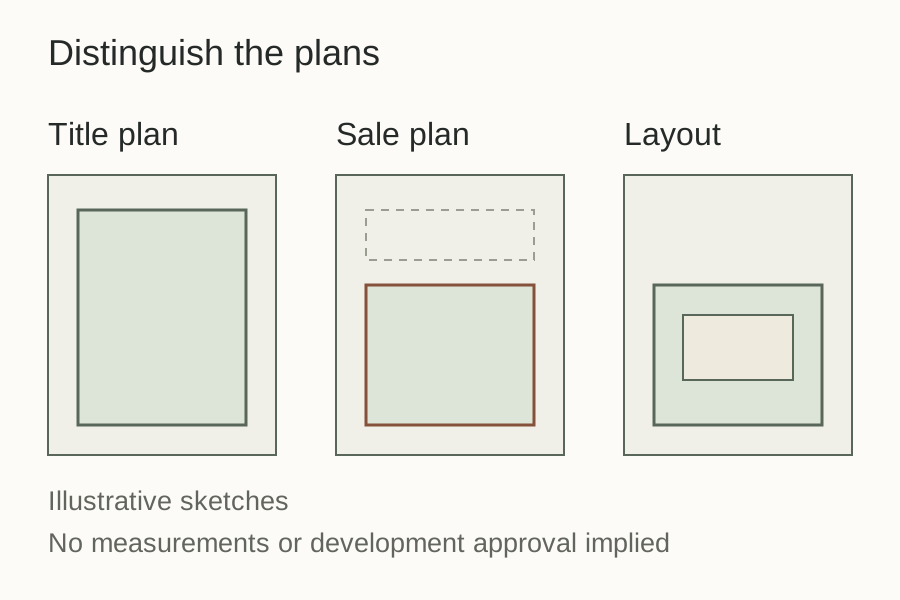
The sale plan should show the parcel, entrances, existing buildings and any land being retained. If a road, yard or strip of adjoining land would also be needed, say whether it is included, shared or subject to an arrangement still to be agreed.
Supply the relevant title references and available documents for the solicitor to review. HM Land Registry’s register and title plan provide registered ownership information, general boundaries and details of rights or restrictions, sometimes through referenced documents. Most title plans do not establish exact boundaries.
A title covering a larger holding therefore needs to be distinguished from the land the owner wants to sell. An indicative development drawing is a different document again. Label each plan so a buyer can understand what it represents.
Current occupation belongs with those details. Identify who uses the land or buildings and provide the relevant agreements to the transaction team. The buyer needs to understand what would be available and when; an owner’s preferred sale date alone does not establish that position.
Make the planning description traceable
Give the application references, decision notices, approved plans and subsequent decisions relevant to the proposed sale. Distinguish an existing permission from a pending application, a preliminary discussion or an owner’s intention to seek a different use.
Where there is permission, include its conditions and the records of any approvals of further details. Government guidance on planning conditions explains that conditions can control details and the sequence of development, including matters that need to be addressed before work starts.
A planning adviser should establish what the documents allow, the relevant time limits and what remains outstanding. Avoid describing the land as ready for construction simply because a decision notice exists. The buyer may still need to assess conditions, obligations, private rights and the work required to deliver the scheme.
Separate confirmed information from assumptions
For access and services, provide the documents behind the description. An existing entrance, a nearby utility or an old connection quotation each tells the buyer something different. Record the source, date and any limits on what has been confirmed.
| Subject | Information to make available |
|---|---|
| Access | Route, relevant agreements and known works or third-party dependencies. |
| Services | Available provider correspondence, connection proposals and their conditions. |
| Surveys | Reports, dates, the area assessed and any restrictions on their use. |
| Occupation | Current use, agreements and the proposed availability of the parcel. |
Existing reports should be identified by what they assessed. A report for an earlier proposal may need further work for a different use or layout. The buyer and its advisers should establish whether they can rely on it and what needs updating.
For an England site, include relevant flood information and assessments already held. The Environment Agency’s planning guidance explains when a flood-risk assessment may be required and the importance of site-specific information. A general map result does not settle a particular development proposal.
Decide which gaps to resolve before marketing
Identify the missing answers that could change the land being offered, the proposed use or the timetable. An unresolved access arrangement is a different issue from an absent copy of a document that already exists. Ask the appropriate solicitor, planner or technical adviser what each gap means before deciding whether to commission more work.
Marketing need not wait for every possible study. The property description should make the outstanding matters visible and distinguish supplied facts from assumptions. Price and transaction terms belong alongside that description, using the owner’s or valuer’s instructions.
Rivermark can help an owner organise the property information, identify missing documents and prepare for a sale or an agreed buyer approach. Valuation, legal, planning and technical conclusions remain with the relevant advisers. Our commercial land buying article explains the questions a prospective buyer will then investigate.