

Shared parking is useful only if the new occupier can use it when customers arrive. Before offering spaces to a gym or padel operator, establish which bays you can grant, whether the busiest periods overlap and which routes must stay clear. An empty car park at one viewing does not establish any of that.
For a landlord, the question is whether another occupier can work alongside the existing businesses without relying on parking already promised elsewhere. Resolve that before the operator builds its proposal around a space count.
The planning discussion here concerns England. The linked RICS leasing code covers England and Wales; use the relevant local advice elsewhere.
Start with the parking rights already granted
A site plan shows physical spaces. The leases, parking plans and other relevant agreements establish what has already been granted to each occupier. Ask your solicitor to check those documents, the landlord’s title and any superior-lease restrictions against the proposed arrangement.
There is a commercial difference between reserved bays, a right to use a shared area and parking available only at certain times. Do not describe all three as an allocation of spaces. An operator needs to know whether its customers are assured particular bays or must compete for the same supply as everyone else.
The RICS Code for leasing business premises includes special rights such as parking in the heads of terms and calls for clear parking arrangements in the lease. That is a useful starting point for the discussion, rather than leaving the details to a site-management notice after occupation.
Compare changeovers, not just opening hours
An office and an evening sports venue may appear to complement each other. But customers can arrive before the office staff leave. A gym class or padel booking can also bring the next group onto the site while the previous group is still changing, socialising or walking back to its cars.
Ask the proposed operator for its session timetable, likely attendance and staffing, then compare those periods with the other occupiers’ working patterns. Include deliveries, shift changes and occasional busy days. Separate an operator’s estimate from a count observed at the site.
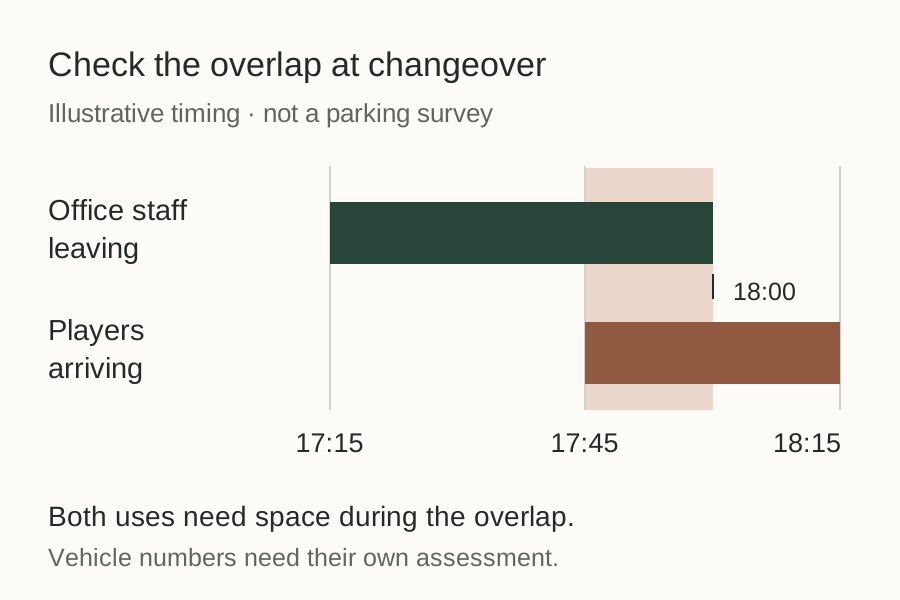
A dated parking survey at the relevant times is more useful than a photograph taken during a quiet hour. Where the proposal needs transport assessment, a transport consultant should establish the survey and analysis required. Do not use a small observation sample to promise spare capacity throughout the week.
Count usable spaces and keep routes clear
Before comparing demand with supply, identify bays reserved for other occupiers and spaces with a specific purpose, such as accessible parking or loading. Show pedestrian routes, turning areas, entrances and emergency access on the same plan. A gap between parked cars is not automatically another parking space.
The HSE’s parking guidance advises keeping parked vehicles out of traffic and pedestrian flows, making permitted parking areas clear and reducing manoeuvring and reversing. A sports venue’s visitors also need a safe route between their cars and the entrance, particularly where the same yard serves deliveries.
Test access during the proposed hours. Check gates, lighting, signs and who controls them. A shared car park that closes before the venue does leaves an unresolved operating problem, even if enough bays are available earlier.
Check the planning position for the proposed use
Use the property’s planning decisions, approved plans and conditions alongside the local parking standards. The proposed gym or padel operation may differ from the use against which the existing parking was assessed.
England’s national transport planning policies address local parking standards, safe access and assessment of transport impacts. They take account of the location and type of development, rather than supplying one parking ratio for every commercial property. A planning adviser and, where needed, a transport consultant should assess the actual proposal.
For a warehouse being considered for padel, parking sits alongside the court layout, clear heights and fit-out commitments. Solving one of those questions does not settle the others.
Put the arrangement into the letting terms
Once the practical proposal is understood, give the solicitor a marked plan and an operating outline. Agree what is being offered before the lease is drafted:
| Subject | Point to agree |
|---|---|
| Spaces and access | Which bays or shared areas may be used, by whom and at what times? |
| Other occupiers | Which existing rights and reserved spaces must the arrangement respect? |
| Management | Who handles gates, permits, visitor directions and parking problems? |
| Costs and works | Who funds lighting, signs, maintenance and any agreed alterations? |
| Future changes | What happens if hours, booking patterns or the use of adjoining premises change? |
Leave unconfirmed capacity or permissions identified as unresolved. If the letting depends on them, have the solicitors address that dependency in the agreement. The owner and operator then have a specific parking proposal to assess, rather than a general promise of shared space.